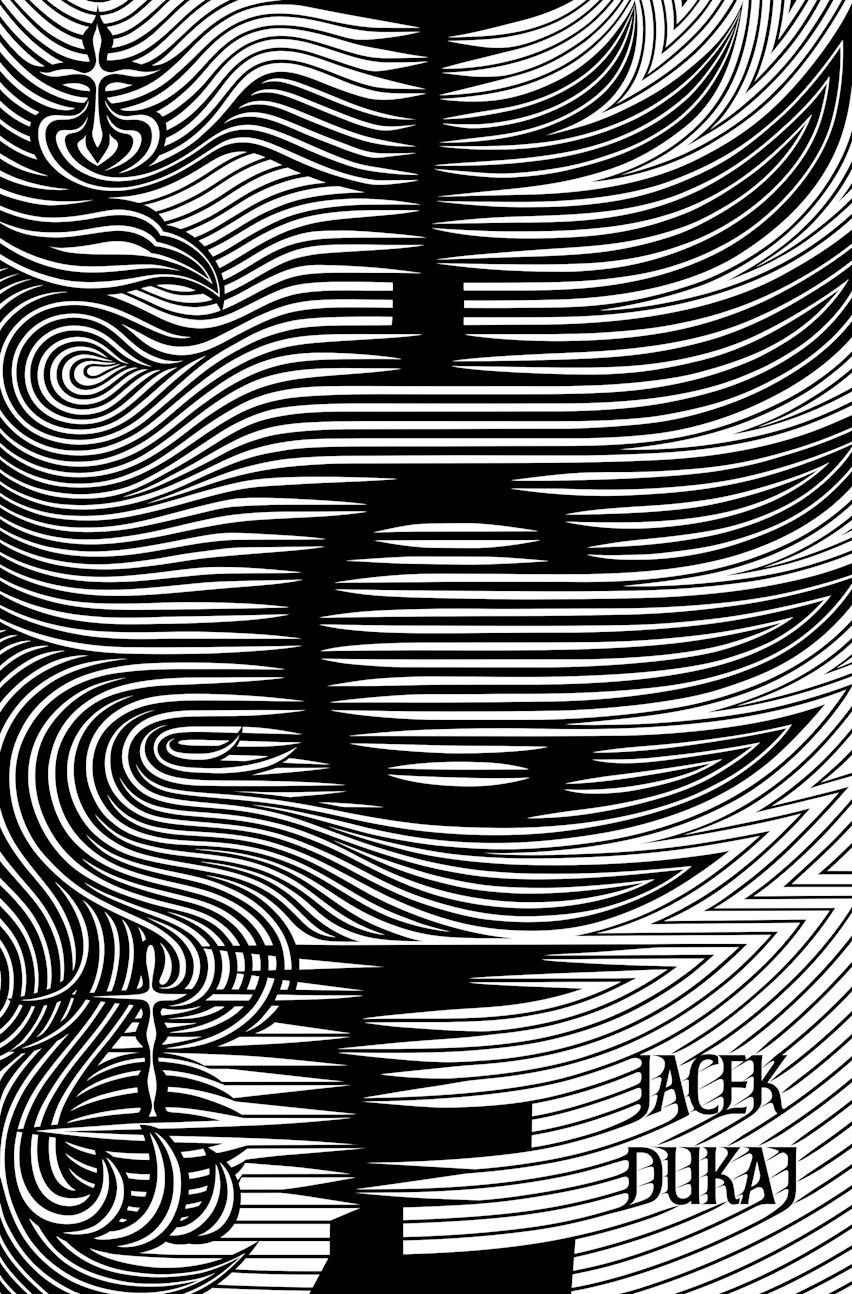
Read Ice for a dense doorstopper to keep your mind active during a long and lonely winter. You follow a Polish mathematician named Benedykt. He's the kind of theorist who spends a whole lot of time ranting about questions related to the limitations of logic, language, perception, and the self. Chunks of dialogue are dedicated to academic topics, and refreshingly, no one breaks character during these conversations.
If you're intimidated by meaty philosophical discussions, don't worry. It's accessible. For those without a background in philosophy, take it slow. As long as you're patient, understanding should come. Anything technical is explained (and experienced concretely) in multiple ways, and it's all plot relevant. Also Benedykt has to get his head out of the clouds and come down to earth for a lot of that plot. Most of the narrative is about how, in order to pay off gambling debts, he agrees to a mysterious mission to see his estranged and possibly magical father. The mission is forced upon him under strange conditions, and Benedykt doesn't fully know who he's working for or against. Intrigue ensues. Expect some surprising (but still sufficiently foreshadowed) twists and turns as different factions make their maneuvers.
The one thing Benedykt is certain of is that his mission involves a fraught entanglement between himself, his father, the Russian Empire (which never collapses in this alternate timeline), and an icy phenomena called gleissen. The ice magic contributes to exploring broader themes around things that are frozen and fixed in time and space, and how freezing things in place might change our perspective on history, on the future, and on truth in general, touching on various interconnected scientific, mathematical, philosophical, geopolitical, psychological, theological, and literary theories of the unknown and the unfathomable. However, setting aside how cerebral things get, the magic is more than symbolic. It's also just cool. I loved the wintry Russian vibes and the steampunk alternate history setting. I loved when real historical figures popped in and out of the narrative to shed light on small details. The prose also beautifully narrows in on small but illuminating details.
Speaking of the prose, credit needs to be given to the translator. Ice is written in the first person point of view with limited use of personal pronouns, playing with ideas around subjectivity. The translator seamlessly brings this experiment to English speaking audiences. I found much to appreciate in reading a story like this one in translation, where the narrative itself is so concerned with language. I recommend the experience if you're looking for a book that is not for merely passing the time but for filling it.
-
Babel ❁
-
Labyrinths ❁
-
The Trial ❁
-
Vita Nostra ❁
-
A Clockwork Orange ❁
-
The Master and Margarita ❁
-
The Picture of Dorian Gray ❁
-
Jonathan Strange & Mr Norrell ❁