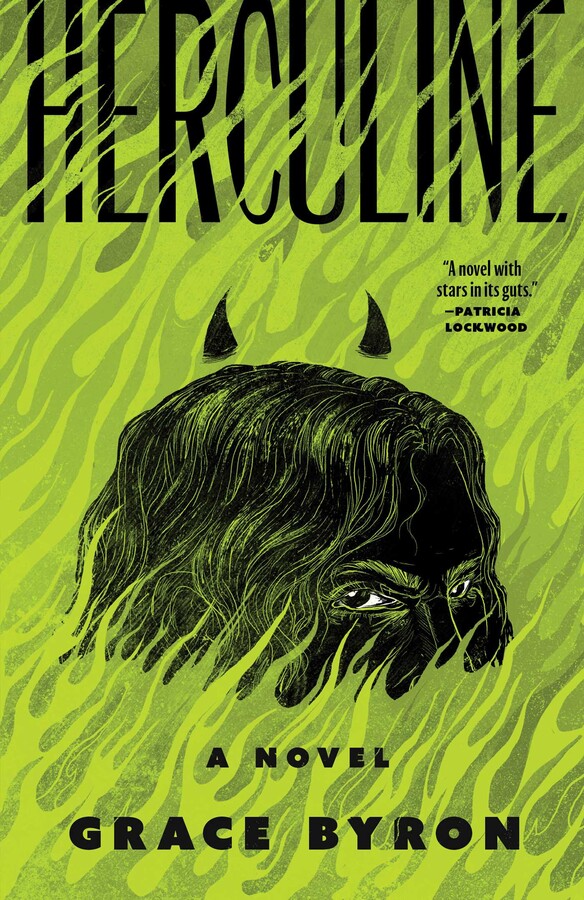
Herculine tells the story of a woman who, after her life falls apart, moves to commune founded by her ex. The commune is ostensibly for trans women who've survived terrible ordeals (oftentimes conversion therapy). There's a whole lot of trauma bonding, so it's not exactly the happiest place in the world, and things only get bleaker from there. What follows is violent, erotic, and hilarious. Each scene had me either squirming or laughing out loud. The narrator's biting observations about everything from religion to life in New York City are sharp and relatable. I loved her as a character with all her many flaws. The side characters also felt so real, despite half of them getting possessed by very unreal demons. I found the book equal parts campy and devastating.
There's a lot of social commentary packed into the novel, but as prominent as it is, Herculine never once feels like a manifesto. The point is to be a horror story first, and it's an excellent one about demons, cults, trauma, sex, and abuse. Nothing is sanitized just to make straight cis readers feel more comfortable or educated, though I still learned a lot. The narrator's jaded and self deprecating personality makes the book surprisingly approachable, even if some of the content is transgressive or outside of your usual comfort zone. It's provocative and critical, but it's also inviting, which is fitting for a book about trans women trying to navigate questions around inclusion versus exclusion:
Is it sometimes a good thing to isolate yourself if it's for your own protection? Should some spaces only include certain types of people? If so, which types of people do you end up alienating? What kind of bubble do you create?
The commune that serves as the setting for much of the story is far from a utopia, so you might expect that the novel comes down against isolationism, but things aren't framed as black and white. There's nuance. Even when the author does insert a strong opinion about something, she writes in a way that feels gentle and self aware, so you never feel scolded for asking questions in the first place.
I'm also not actually sure that the author truly does insert her opinions all that often. Most opinions come directly from the narrator, who could potentially be a self insert, but if she is, you barely notice it. She's messy and believable, and she has real weaknesses that make her all the more compelling. The narrative is definitely driven by her decisions and development in a way you might expect from a work of literary horror, though there's a wild plot too as you jump between different times and places, getting more insights into the protogonist and her backstory. For me, the wildness is a good thing. It contributes to the frantic, erratic, and surreal atmosphere, and I'm an absolute sucker for surrealism. Not once was I bored. I was just thrilled to be along for the ride.
-
Sorrowland ❁
-
Detransition, Baby ❁
-
Bury Your Gays ❁
-
In the Dream House ❁
-
Lord of the Flies ❁